A two-week tracker
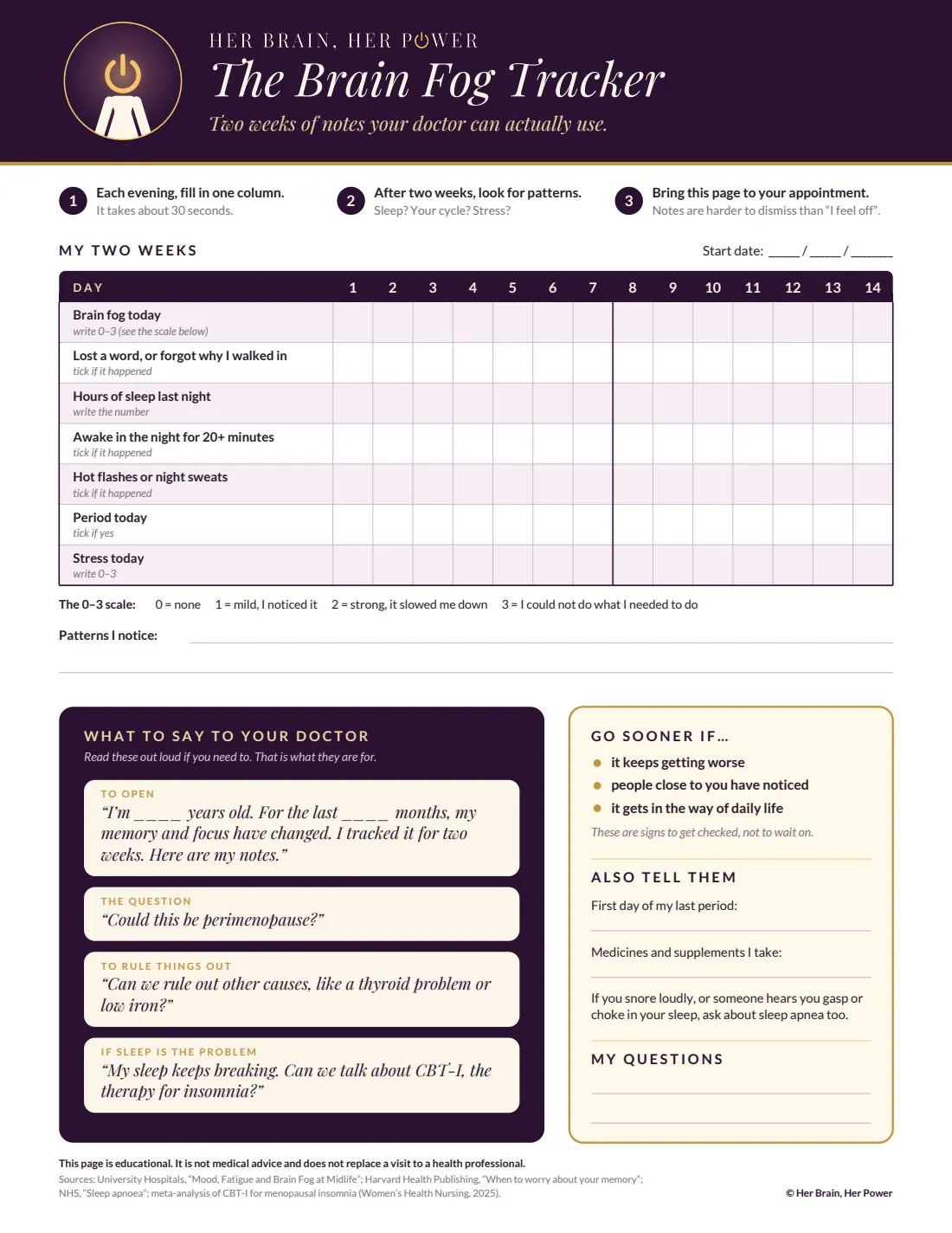
Seven things to note each day: brain fog, lost words, hours of sleep, waking in the night, hot flashes, your period and stress.


Free · one printable page
Brain fog, lost words and broken sleep are common in perimenopause, and easy to dismiss. Track them for two weeks on one page, and walk into your doctor’s office with notes they can use.
Free. We’ll email you the tracker, then an occasional short note about the brain after 40. Unsubscribe any time. Privacy
What’s on the page
Seven things to note each day: brain fog, lost words, hours of sleep, waking in the night, hot flashes, your period and stress.
Four sentences you can read out loud, including the one that matters most: “Could this be perimenopause?”
The three signs that mean you should not wait two weeks, and the things your doctor will want to know.
In the appointment
“My brain isn’t working” gives a doctor little to go on. “Eleven foggy days out of fourteen, and nine of them came after a broken night” gives them somewhere to start.
To open“For the last few months, my memory and focus have changed. I tracked it for two weeks. Here are my notes.”
The question“Could this be perimenopause?”
To rule things out“Can we rule out other causes, like a thyroid problem or low iron?”
Where this comes from
Her Brain, Her Power is a channel about the brain after 40. Each short video takes one thing women are told, checks it against published research, and gives you one thing to do. Watch on YouTube.
Questions
Yes. You give your email address, and the tracker arrives as a PDF you can print. There is nothing to pay.
No. It is a tool for taking notes and for talking to your doctor. It cannot tell you what is causing your symptoms, and it does not replace a visit to a health professional.
That is exactly who it is for. The tracker does not assume a cause. It helps you and your doctor look at what is happening, and it includes the question to rule out other causes.
We use it to send you the tracker and occasional short notes about the brain after 40. We do not sell it or share it. Every email has a link to unsubscribe.
Yes. The Menopause Brain Toolkit has a 30-day tracker, a one-page summary to hand to your doctor, more scripts, and a plan for the 3 a.m. wake-ups. The free tracker is a good place to start.
Start tonight
Free. Unsubscribe any time. Privacy